


I really love tabletop games.
Not just playing them—but studying them. The mechanics. The rules. The quiet magic of how a system can steer behavior, tell a story, or nudge your thinking without ever telling you what to think.
Dice are especially good at this.
They’re tiny engines of chance. Pocket-sized provocateurs. You can roll one anytime, anywhere, and suddenly you’re not stuck—you’re moving. It reminds me of The Dice Man, where a guy hands major life decisions over to fate. Extreme? Sure. But sometimes you don’t need a life-altering roll. Sometimes you just need a nudge. Or a direction. Or permission to stop overthinking and let the dice pick the ice cream flavour.
A while back, I was working with my friend Drew Wiberg, helping him develop something he calls the d666 Engine—a dice-based system inspired by tabletop RPGs like Dungeons & Dragons, but with way more logic baked in. I immediately saw the potential, made a few tweaks, and started mapping it onto a set of tables I’d been building around futures thinking and design fiction.
I wrote up a proper spec in Notion. Rules. Tables. Logic. The whole thing. I imagined carrying the dice around with a tiny folded cheat sheet in my pocket—rolling whenever I felt creatively stuck and letting the system do its thing.
Then I had a very 2026 thought:
Why not just vibecode1 this into digital existence?
So I dropped the spec into a code assistant and said, “Hey—make this real.” A few hours later, what I thought was going to be a purely analog dice game became an interactive system.
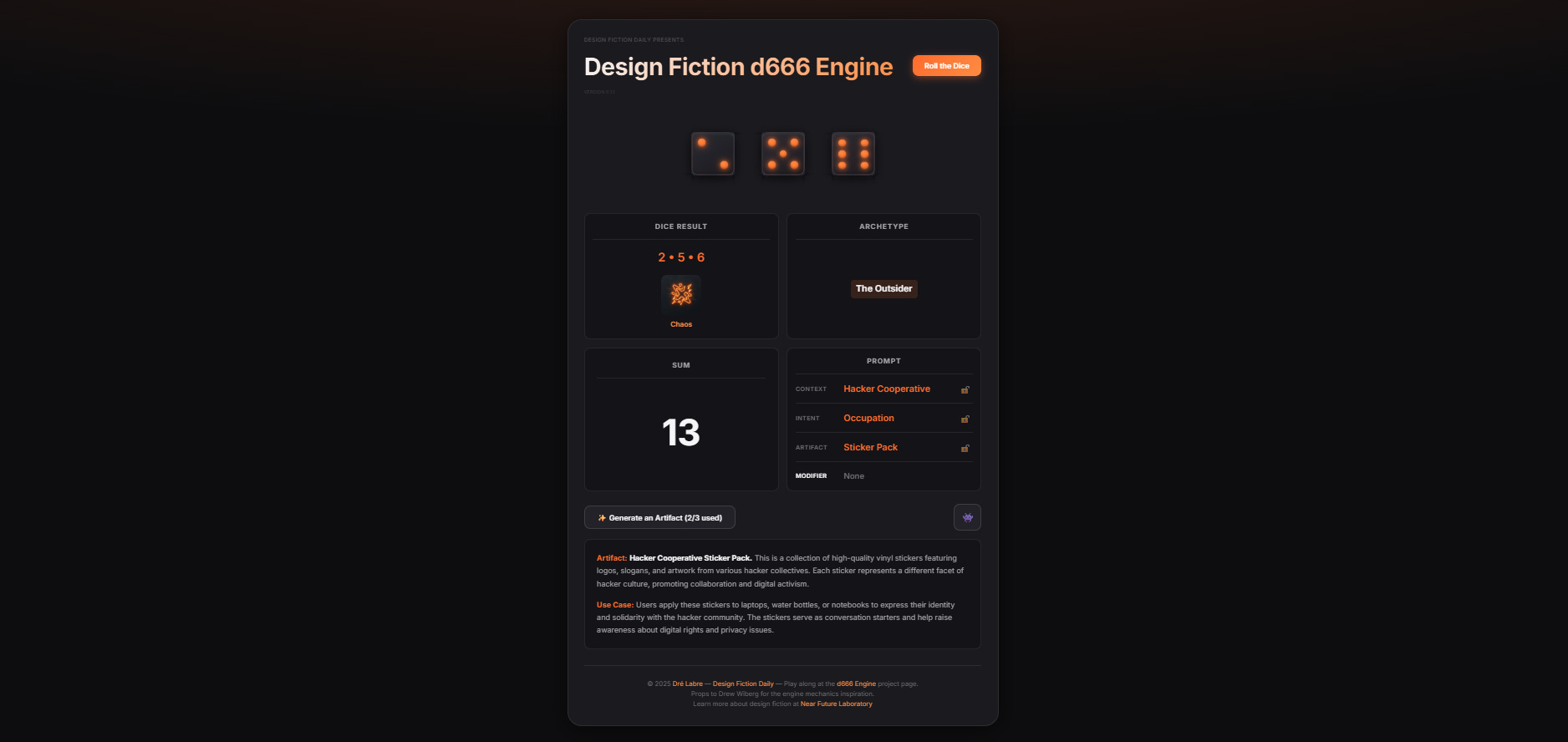
And so—today—I’m sharing an early version of the Design Fiction D666 Engine.
You can roll the dice and generate structured prompts designed to spark design fiction ideas. If you want to peek down the road a bit, there’s also an option to use AI to generate a speculative artifact and use case based on your roll. Inspiration, not replacement. (Your brain still does the heavy lifting.)
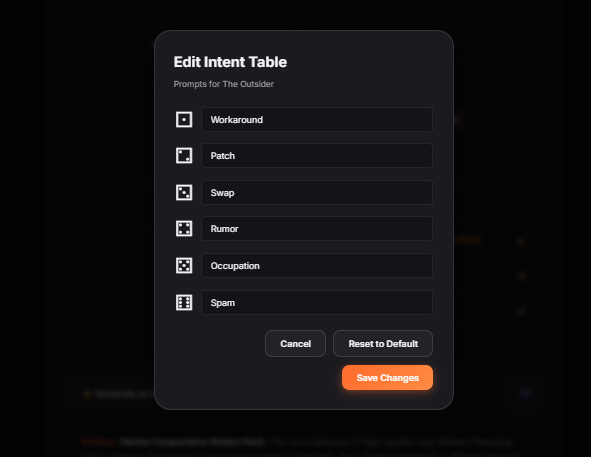
You’ll notice some editable areas too—places where you can swap in your own tables and customize the engine to your own interests or practice.
This is very much a v0. I had a ridiculous amount of fun building it, and I’m curious where it could go next.
If you’ve got thoughts or suggestions, leave a comment below.
For my stack I used Claude Code inside of Antigravity hosted on Vercel.
Very Cool! I'm also constantly tweaking role-playing games I have played/read about into design fiction scaffolding.
I'll give this a go later today. If I don't forget, I'll swing you a link to my current work in progress on the NFL discord. would love to get your thoughts on it.
This is GREAT! Excited to continue using. Today this was my result:
Artifact: Media Ministry Endorsement Pamphlet. This pamphlet is a glossy, tri-fold brochure featuring the official seal of the Media Ministry, showcasing government-approved media outlets and campaigns. It includes vibrant graphics, concise descriptions of endorsed content, and QR codes linking to further information, making it visually appealing and informative.
Use Case: Organizations and individuals use this pamphlet at public events and community centers to promote trusted media sources, guiding citizens toward reliable information while reinforcing the government's commitment to media integrity. It often serves as a handout during workshops or public forums on media literacy.